What size solar system do I need? A sizing guide for East Gippsland homes
Most East Gippsland homes land between 6.6 kW and 13 kW. Here’s how to work out where yours fits, using your power bill, your roof and the rules on our local grid.
The short answer
Find your average daily usage in kWh on your power bill and divide it by 3.6. The result is roughly the system size, in kW, that generates your daily usage on an average day. In Victoria, 1 kW of well-placed panels produces about 3.6 kWh a day averaged over the year (Australian Government, energy.gov.au), more in summer and less in winter.
Then adjust: size up if you’re adding a battery, an EV or a heat pump. Stay close to the number if you’re out during the day and not planning a battery, because exported solar now earns very little.
Local teams in Lakes Entrance and Bairnsdale
SAA-accredited local installers
New Energy Tech Approved Seller
Free on-site assessment, no obligation
How to size your solar system in four steps
1. Find your daily usage
Look for “average daily usage” on your electricity bill, or divide a bill’s total kWh by the number of days. Use a full year of bills if you can: homes with electric heating use far more in an East Gippsland winter than in summer.
2. Work out when you use it
Solar covers what you use while the sun is up. If the house is empty from 9 to 5, putting the dishwasher, washing machine, pool pump and hot water on daytime timers, or adding a battery, does more than extra panels.
3. Check your roof and connection
North-facing roof space produces the most; east and west roofs produce a little less but spread output through the day. On the AusNet network, single-phase homes can usually install up to 10 kW of inverter capacity and export up to 5 kW (AusNet flexible exports). Three-phase homes can go larger.
4. Plan for what's next
An EV, a heat pump or a battery in the next few years changes the answer. Sizing for them now usually costs less than adding a second system later.
Solar sizing table for East Gippsland homes
Use this as a starting point, not a quote. Generation figures use the Victorian average of 3.6 kWh per kW per day; your roof, shade and orientation will move the real number, which is why we measure on site.
| Your average daily usage | Suggested system | Approx. panels (440 W) | Average daily generation | Often suits |
|---|---|---|---|---|
| Under 12 kWh | 5 kW | 12 | About 19 kWh | Couples and retirees home during the day, gas heating or hot water |
| 12 to 20 kWh | 6.6 kW | 15 | About 24 kWh | Typical family homes without a battery |
| 20 to 28 kWh | 8 to 10 kW | 18 to 23 | About 29 to 36 kWh | Larger families, electric heating, or adding a battery |
| 28 kWh or more | 10 to 13.3 kW | 23 to 30 | About 36 to 48 kWh | All-electric homes with an EV, pool or battery; often three-phase |
Panels can exceed inverter size by up to a third, so a 10 kW inverter can carry about 13.3 kW of panels. Anything above 10 kW of inverter needs a three-phase connection, and every system needs AusNet approval before installation.
Worked example: a Bairnsdale family using 20 kWh a day
An illustration of the method, not a customer quote.
- 20 kWh ÷ 3.6 = 5.6 kW to match their usage on paper.
- Both adults work away from home, so only about 6 kWh is used in daylight. Without a battery, a 6.6 kW system would export most of its output for very little return.
- They want a 13.5 kWh battery for evenings, so we step up to about 8 kW (18 panels): around 29 kWh on an average day. That covers daytime use and fills the battery on most days outside winter.
- In June and July generation can drop to less than half the summer figure, so the battery won’t fill every day. That’s normal, and it’s built into the savings estimate we give you.
What's different about sizing solar in East Gippsland
National calculators miss the things our installers see on East Gippsland roofs every week.
Coastal towns
In Lakes Entrance, Metung, Paynesville and Mallacoota, salt air matters as much as system size. Ask for panels and mounting rated for coastal conditions, and allow for occasional cleaning.
Gum trees and shade
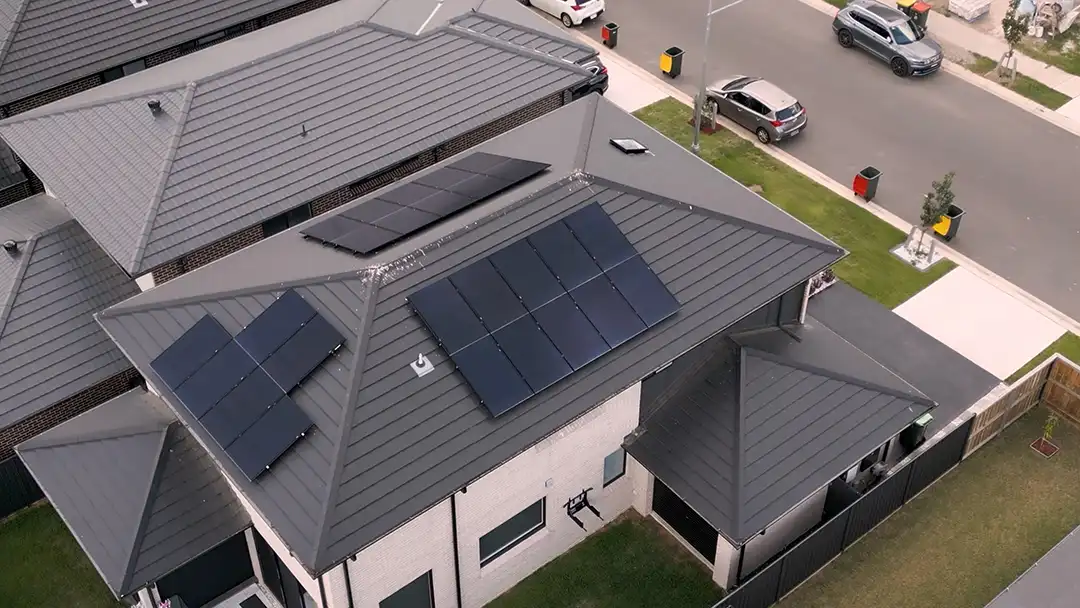
Shade on one panel can pull down a whole string on a basic inverter. Panel-level electronics such as SolarEdge optimisers or Enphase microinverters limit the loss and can make partly shaded roof faces worth using.
Cold inland winters
Around Bairnsdale, Bruthen and Lindenow, short frosty days cut winter output just as heating use climbs. Size on your annual usage, not your summer bill.
Holiday homes
Weekenders and holiday lets can sit empty for weeks. A modest system with monitoring often beats a large array exporting for little return while nobody’s home.
Storms and outages
A solar-only system switches off during a grid outage. If keeping the lights and fridge on matters, include a battery with backup in the plan.
Acreage and sheds
Rural properties often have a north-facing shed roof or room for a ground mount, and many farms already have three-phase power, which allows a larger system.
Planning for a battery, EV or heat pump
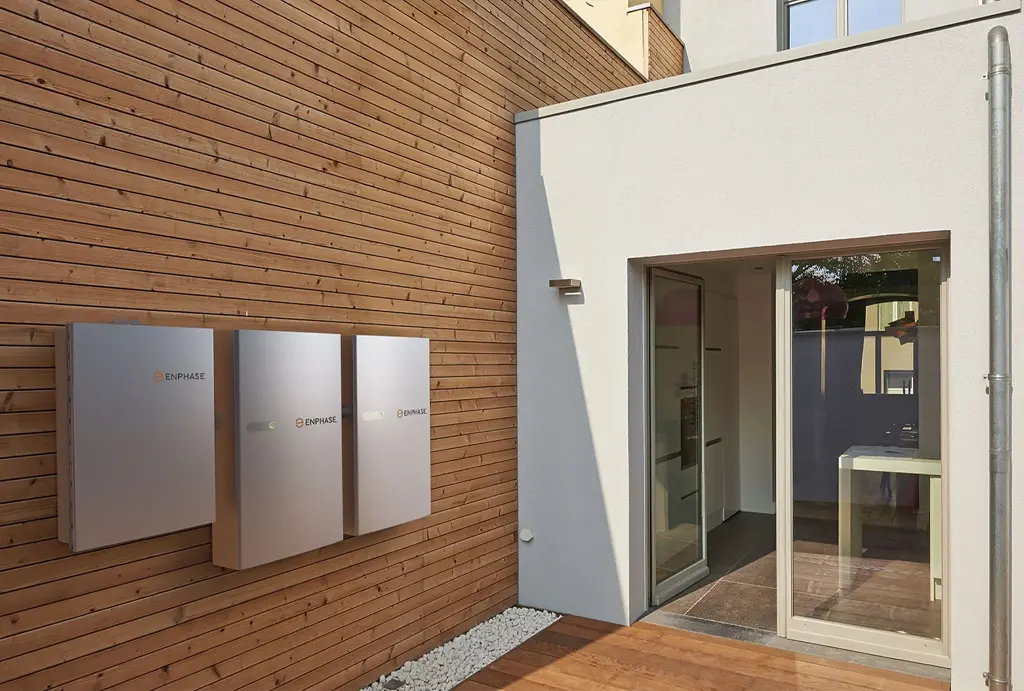
Each of these adds daytime or evening demand. If one is likely in the next few years, add it to your usage before you do the sizing maths.
Rebates that change the maths
Right-sizing matters because the incentives reward what you use, not what you export. See all current solar rebates in Victoria or try our solar calculators, including the battery size calculator and payback calculator.
Estimate your battery rebate
See how much the federal program could take off a battery for your home.

Powered by Your Energy Answers
Why People Choose Solahart
At Solahart, we’re proud to be leading Australia’s solar charge.
Helping smart Aussies make a real difference to the planet, reducing their reliance on the grid, cutting their energy bills, and connecting them to their smart energy future.
Truly Local
Premium Quality
Total Support
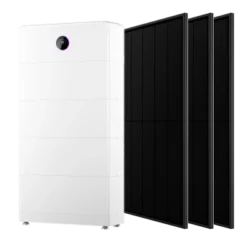
Popular solar and battery packages
Already know roughly what size you need? These packages are a good place to start, and we fine-tune them at your assessment.
Terms and Conditions
Repayments are calculated on a 72 month interest free repayment period.
Cost calculations include upfront incentives available under the Federal Government’s Cheaper Home Batteries Program. Please note that the final rebate amount is determined by the date of installation and commissioning. Incentives are scheduled to reduce significantly for any system installed on or after 1 May 2026.
* The estimated weekly repayment may differ due to the Minimum Monthly Repayment construct. The Solahart recommended amount is to identify the possible return on investment calculation of the selected Solahart system.
Paying only the minimum monthly repayment may not repay the purchase in the interest free period. A monthly account fee of $9.95 applies and a one-off establishment fee may apply for new customers. Establishment fee and monthly fees are added to the balance to determine the MMP payable.
Interest will apply at the expiry of the Interest Free Period if there is a balance owing. To find out if the product is suitable for you, please refer to https://zip.co/au/zip-money for more information. Credit provided by ZipMoney Payments Pty Ltd(ABN 58 164 440 993), Australian Credit Licence Number 441878.
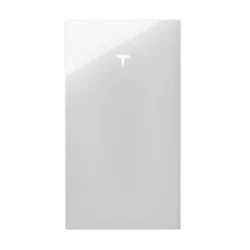
Looking for just a battery?
If you already have solar panels, adding storage is the smartest way to make your investment work even harder.
Terms and Conditions
Repayments are calculated on a 72 month interest free repayment period.
Cost calculations include upfront incentives available under the Federal Government’s Cheaper Home Batteries Program. Please note that the final rebate amount is determined by the date of installation and commissioning. Incentives are scheduled to reduce significantly for any system installed on or after 1 May 2026.
* The estimated weekly repayment may differ due to the Minimum Monthly Repayment construct. The Solahart recommended amount is to identify the possible return on investment calculation of the selected Solahart system.
Paying only the minimum monthly repayment may not repay the purchase in the interest free period. A monthly account fee of $9.95 applies and a one-off establishment fee may apply for new customers. Establishment fee and monthly fees are added to the balance to determine the MMP payable.
Interest will apply at the expiry of the Interest Free Period if there is a balance owing. To find out if the product is suitable for you, please refer to https://zip.co/au/zip-money for more information. Credit provided by ZipMoney Payments Pty Ltd(ABN 58 164 440 993), Australian Credit Licence Number 441878.
Solar sizing questions we get asked
It depends on your electricity use more than the number of people. Many family homes using 12 to 20 kWh a day suit a 6.6 kW system, while homes using 20 kWh or more, or planning a battery or EV, usually suit 8 to 10 kW or more. Divide your average daily usage by 3.6 for a starting point, then have the roof and switchboard checked on site.
Using the Australian Government’s Victorian average of about 3.6 kWh per kW per day, a well-placed 6.6 kW system produces around 24 kWh a day averaged across the year. Expect more in summer and noticeably less in June and July. Shade, roof direction and tilt all change the real figure.
On the AusNet network, which covers East Gippsland, a single-phase home can usually install up to 10 kW of inverter capacity with exports limited to 5 kW. Panels can exceed the inverter size by up to a third, so a 10 kW inverter can carry about 13.3 kW of panels. Three-phase homes can go larger. Some constrained parts of the network have lower limits, which we check before quoting.
Usually, yes. A battery can only store solar you don’t use during the day, so you need enough surplus generation to fill it. A system that only just covers your daytime use will leave the battery part-empty on most days, especially in winter.
Size the battery to your evening and overnight use, which you can estimate from the peak and off-peak usage on your bill. Under the federal Cheaper Home Batteries Program, the first 14 kWh of usable capacity receives the full discount, so 10 to 14 kWh is the best-value size for many households.
North-facing panels produce the most over a year. East and west-facing panels produce a little less in total but spread generation across the morning and late afternoon, which can suit households that use more power at those times. Many East Gippsland homes use a mix of roof faces.
Not on their own. Grid-connected solar inverters switch off during an outage for the safety of line workers. To keep power on during a blackout you need a battery with backup capability, such as a Tesla Powerwall 3 or a GoodWe ESA with backup configured.
No. Victoria’s minimum flat feed-in tariff for 2025-26 was set at 0.04 cents per kWh, so solar you export earns very little. The best-sized system covers what you use during the day, charges any battery you have, and leaves room for future loads like an EV or heat pump, without paying for panels that mostly export.
Get a system sized for your home, not an average
- We look at a year of your power bills or smart meter data.
- We check your roof, shading, switchboard and grid connection on site.
- You get a written design with panel layout, expected generation, and rebates applied.
Lakes Entrance: Shop 1, 3 Carpenter Street
Bairnsdale: 1/467 Main Street
Solahart Has Been Ranked Number One by Canstar Blue
We’re proud to be ranked number one in Canstar Blue’s 2024 review of Hot Water Systems in Australia, retaining the prestigious title for a second consecutive year. Solahart earned five stars across multiple research categories this year, including overall satisfaction, value for money, performance and design.